Locating Your Herd: Equine-Facilitated Coaching for Link and Belonging
I keep in mind the very first time I viewed a customer's shoulders drop beside a steady bay gelding called Finn. She had actually shown up tight as a drum, breath caught up high in her breast, and stood at the edge of the sector urging she did not "do steeds." Finn stood at a distance, grazing on a hay internet. Ten minutes later on, through a few straightforward breath cues and a soft approach, they were walking alongside. No halter yet, no pressure, simply her presence and his approval. She murmured later, practically stunned, "I really felt seen." That is the heart of equine-facilitated training, the way horses appear to invite us back right into our bodies, our integrity, and our feeling of belonging.
Why equines assist us find connection
Horses read the globe via sensation, stress, stance, and intent. They reply to the power we bring, not the tale we inform. A horse does not respect your work title, your diagnosis, or your shield of creative words. It cares about whether you are meaningful, grounded, and respectful of room. When a thousand-pound prey animal acknowledges you, matches your breathing, or actions towards you, the comments lands in a deeper location than language.
That is one factor equine-facilitated mentoring often helps individuals who feel disconnected from themselves or from others. The arena comes to be a place where harmony matters more than efficiency. If your inner state does not match your outer signals, a steed will reveal it via movement. If your body softens, your breath slows, and your intent comes to be clear, the steed will certainly frequently soften with you. The outcome is not just insight, yet a felt shift. For many, especially those who have attempted talk-based assistances without complete relief, experiential discovering with equines introduces a new doorway.
Sorting the area: mentoring, tasks, and therapy
The equine area consists of several approaches, and the hodgepodge can be complex. Below is exactly how I discuss it to family members, clinicians, and organizations determining where to begin:
-
Therapeutic horsemanship refers to a wide category that includes mounted and unmounted activities taught by licensed riding trainers who adjust the environment to sustain bikers with diverse needs. It commonly develops balance, control, communication, and confidence. Many facilities include equine-assisted tasks that promote leisure abilities, social connection, and learning without always targeting scientific diagnoses.
-
Equine-assisted services is an umbrella term some organizations make use of to capture the large range of supports supplied with equines. Programs might consist of riding lessons, ground-based discovering, experts support, and health workshops.
-
Equine-assisted mentoring, additionally called equine-facilitated mentoring, focuses on personal or professional growth utilizing ground-based exercises. The trainer overviews representation and skill building around goals such as borders, management, interaction, and resilience. There is no medical diagnosis or treatment strategy, and the process enhances, instead of replaces, therapy.
-
Clinical equine treatment engages accredited psychological health professionals or physical therapists that use the equine as part of a restorative plan. You might see this for trauma therapy, anxiety assistance with steeds, or sensory integration work within an autism equine discovering program.
Centers frequently blend offerings. You might see equine-facilitated health groups on weekends, ADHD equine finding out support after college, and team building with horses for regional companies. The secret is to match the method to the goal. If you desire leadership practice and symbolized confidence, coaching fits. If you need to deal with PTSD or an eating disorder, look for mental health professionals that incorporate horses into therapy.
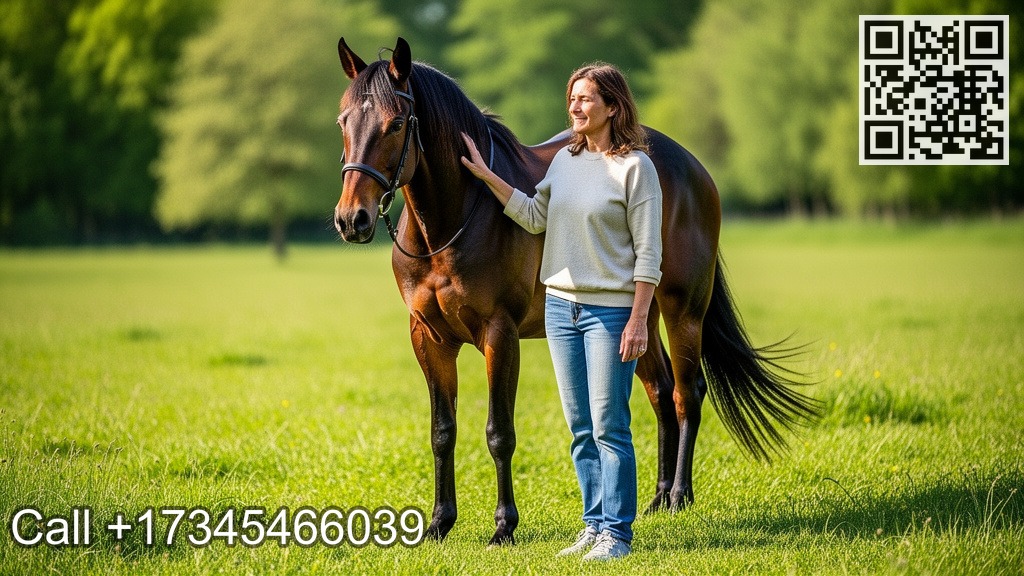
What equine-facilitated training in fact looks like
A great coaching session is not a horse trip. No safety helmets needed unless the program includes placed time, and a lot of the work happens on the ground. I generally start in a silent space, present the steed free or on a loose lead, and co-create a strategy with the client. Objectives can be as basic as finding out to establish and hold a border line, or as complex as restoring depend on after work environment burnout.
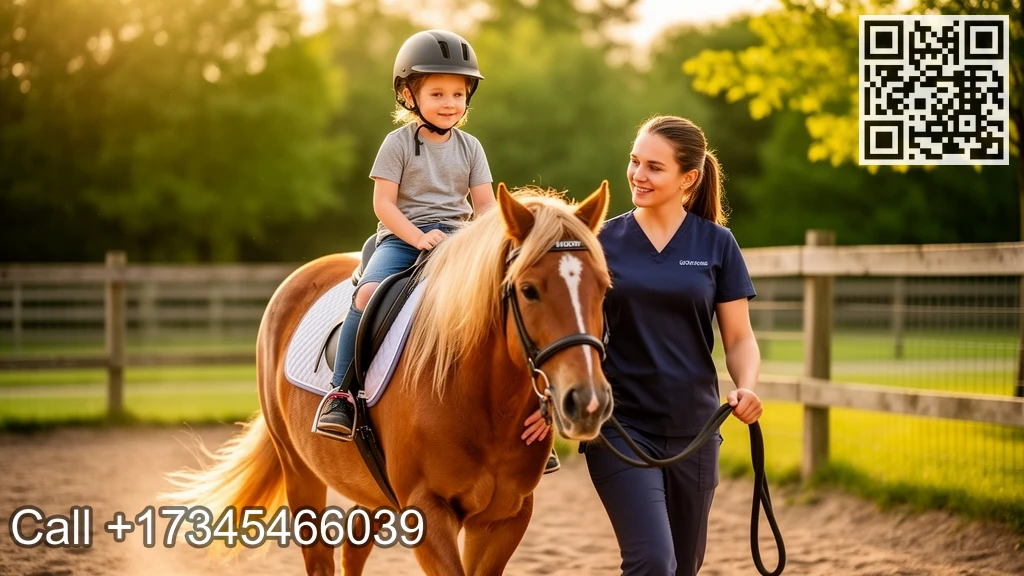
In technique, the field comes to be a living lab. If you hurry, the horse wanders away. If you center yourself and ask clearly, the equine transforms and advance. There is no one appropriate means. Some customers lead a horse through obstacles to discover exactly how they take care of pressure. Others stand still and discover to endure nearness without collapsing their very own requirements. The learning has a tendency to land because the body gets involved. You are not just talking about borders, you are exercising one with a receptive partner.
An initially session, action by step
- Arrive and clear up, with a brief safety quick that includes where to stand, just how to touch, and when to pause.
- Grounding method, such as box breathing or a sensory check-in, to aid your nervous system change into a receptive state.
- Meet the steed at a distance, observing stance and signals, after that select how to approach.
- Engage in a straightforward task, like asking the steed to walk with you at a matched rate or to stop at a cone while you hold a border rope.
- Debrief with your instructor, observing where the job mirrored daily patterns, and set one small practice to reclaim into your week.
That arc can unravel in numerous ways. If stress and anxiety flares, we decrease. If a client is kinetic, we might set a movement-rich job that consists of weaving poles, supporting with clear hand signals, and resetting when interest jumps. The horse's feedback maintains us honest.
What the horses show our bodies
Clients commonly ask why this functions when they have currently read guides and attempted to assume their way to change. Steeds educate through somatic channels. If you are holding your breath without observing, an equine leaning away from you will certainly make that pattern noticeable. If your feet barely touch the ground after years in high-alert setting, you will locate it difficult to lead a horse with quality up until you root on your own. That is somatic recovery with equines, the method body knowing and emotional learning pigtail together.
There is additionally the issue of co-regulation. Many individuals find their heart rate and muscle mass tone modification around calm equines. The barn offers rhythm, from unguis on dirt to audible breath. Grooming welcomes bilateral activity and a mild stress touch that can downshift a jangly nerve system. While not a cure-all, this atmosphere provides a scaffold that chat alone can not. I have actually seen customers tracking stress go from an eight to a 4 in twenty mins, after that hold that modification while browsing a challenge training course with their steed companion. It is not magic, just a clear feedback loop.
Who comes to the arena
I deal with a large arc of individuals. Some seek equine-facilitated wellness after a life transition, like a divorce or occupation modification. Others come after exhaustion or an innovative block. Moms and dads bring children for ADHD equine discovering support when institution comes to be an everyday fight. Individuals with sensory sensitivities check out an alternative treatment for sensory obstacles due to the fact that interior centers really feel also bright and tight. Autistic teenagers sign up with an autism equine finding out program built around predictability and selection, not forcing eye contact or little talk. Grownups with panic symptoms come for stress and anxiety support with horses to practice breath and border abilities in a setting that feels safe sufficient but real adequate to stretch.
For teams, team building with steeds surfaces characteristics quicker than a boardroom can. I have actually watched a group understand that three of them habitually over-function, one goes away under tension, and none of them asks easily for help. The steed will certainly not move through the obstacle till the group calibrates its roles. That lesson returns to the workplace on Monday morning.
Safety, ethics, and reasonable edges
A responsible program places safety first, for both people and horses. You need to always see a skilled equine handler or instructor existing, also in pure training sessions. Facilities should have clear guidelines around helmets if riding is included, emergency situation treatments, and horse well-being. The equines themselves require regular rest, yield, and the right to say no. If an equine pins ears, steps away, or looks stressful, your facilitator must respond swiftly and adjust the plan.
Not every condition is a suitable for every style. If a person has a background of violence towards pets, I will not start in the arena. If a client has unrestrained seizures or remains in intense psychosis, I refer to a professional group. Individuals with extreme allergic reactions might need a modified strategy that restricts pet grooming or uses an outdoor space with masks. The moral line is this: match services to the person, not the other way around, and do not push the equine or the human into circumstances they can not browse safely.
A couple of tales from the rail
A forty-year-old item manager involved rebuild self-confidence after a harmful work. Her words were consistent, however her body concealed supporting in the shoulders and a practice of excusing every little thing. With an individual draft cross, we practiced strolling with objective and quiting without shrinking. By week four, she could request area with one peaceful breath and a hand raised, after that maintain that limit for a full min while the steed evaluated carefully. She reported utilizing the very same motion in strained conferences, minus the horse, to wonderful effect.
A fourteen-year-old with ADHD got here with a knapsack packed with fidget tools and a background of detentions. He liked rate and despised waiting. We set up a barrier program that awarded micro-pauses. The guideline, specified just, was that the steed can not move forward till the handler's feet were still and his eyes had actually scanned three factors ahead. The very first shot resembled a tangle. By the 5th, his feet planted, breath boiled down, and the steed walked smoothly via. He timed his very own runs and shaved seconds not by rushing, but by stopping with purpose. His mommy later on observed he utilized the very same strategy for homework, inspecting march loud prior to starting.
A parent of a kid with autism came since visits seemed like a revolving door of triggers and stickers. In the sector, we offered her little girl options: which clean to utilize, whether to come close to from the shoulder or the rump, when to step away. The kid liked the predictability of grooming strokes and the weight of leaning lightly versus the steed's shoulder. After several sessions, shifts in the house enhanced when the family added a brief "barn routine," also without an equine, that mimicked grooming's rhythm prior to bedtime.
How teams learn with horses
Horses are brutally fair regarding management. They react to clearness, consistency, and shared regard. A team-building session could consist of moving a loosened steed through a collection of cones without touching the pet, just by coordinating position, space, and purpose. This discloses that speaks up, who listens, where conflict avoidance lives, and just how the group deals with obscurity. The knowing is sticky since it is felt. When a team experiences that the horse moves best when the quiet analyst maps the route and the exhibitionist regulates volume, it re-weights duties back in the workplace.
I like small teams for group building, generally six to twelve individuals, with at the very least 2 equines and 2 facilitators. That ratio offers space for observation and practice. Debriefs matter greater than the barrier. If the group misses the discovering and just celebrates "we did it," we have actually lost the gold.
Preparing for your first visit
The functionalities are simple, though not constantly obvious to city customers. Put on closed-toe shoes and layers you do incline dusting off. Leave hanging headscarfs and loud jewelry at home. Prepare for the weather. Bring a canteen, and if you are scent-sensitive, allow the staff recognize so they can select a quieter grooming location. If you fidget, state so. Excellent facilitators appreciate sincerity more than bravado.
Shorter sessions of 45 to 60 mins are usually much more effective than long marathons. Your nervous system can take in only so much novelty at once. A collection of 5 to 8 meetings, spaced regular or every various other week, has a tendency to generate visible changes. You will recognize the job is landing when the changes you feel with the equine turn up in difficult conversations or early morning routines.
An easy list to set on your own up for success
- Comfortable, tough shoes and weather-ready clothes you do not mind getting dusty.
- A clear, moderate goal for the day, like "method claiming no" or "observe my breath under tension."
- Willingness to stop briefly and name what you are really feeling, also if it is messy.
- A plan to incorporate one little method in between sessions, such as three minutes of based standing prior to phone calls.
- Communication with your various other suppliers if you are also in therapy or OT, so sustains align.
Measuring progress without getting rigid
People request metrics. It is fair to desire proof that time and money are well spent. Some centers utilize official tools, others remain casual. I motivate a hybrid. Prior to you start, pick 2 or three indicators that would inform you life is obtaining much easier: less shutdowns at the workplace, far better rest start, more comfortable eye get in touch with, less school disasters. We likewise look at body pens, like breath price throughout a difficulty or the moment it takes to resolve from agitation.
Quantify where you can. If panic spikes daily, track frequency and period every week you participate in. If your team's communication breaks seven times in a two-hour conference, check that number once again a month after your arena day. Keep the actions regional and truthful. Steeds help most when the emphasis remains on function, out thrilling a spreadsheet.
Working with children and sensory differences
For youngsters with sensory processing differences, the barn setting can be a mixed bag. Appears echo. Hay can impulse. Natural leather has a strong odor. Those components can overwhelm, or they can function as exposure with control. Excellent programs readjust the sensory tons. This might resemble using peaceful hours, grooming behind-the-scenes with natural light, or beginning with discuss a sheepskin pad prior to moving to a curry comb. For some children, installed time at the walk, with a sidewalker and a leader, provides deep stress and vestibular input that aids regulation. For others, the stillness of standing with a steed and matching breath works better. Alternate therapy for sensory difficulties need to never be a one-size script.
ADHD equine finding out assistance is successful when it channels movement and incentives interest, not reductions. Develop tasks that have begin lines, finish lines, and an opportunity to reset without shame. Give instant, concrete comments. Let the equine's rhythms do several of the coaching. Youngsters learn fast when the lesson is personified and the stakes feel actual however kind.
Credentials, concerns, and picking a program
Vet your companies. Ask what qualifications or licenses they hold. Teachers might bring qualifications in restorative horsemanship from companies that educate adaptive riding experts. Equine experts might be seasoned handlers with years of equine treatment and habits. Trainers could have ICF or other mentoring accreditations plus additional research study in equine-facilitated mentoring. If you are looking for medical job, verify that a certified mental health specialist or physical therapist is truly involved, not just consulted once.
Walk the building. Try to find clean water containers, risk-free secure fencing, and horses with bright eyes and complimentary motion. Ask how many sessions each equine does per day. The solution ought to be modest, with rest and turnover integrated in. Ask about safety protocols, emergency situation strategies, and just how they match steeds to clients. A thoughtful response signals maturity.
Listen to your gut throughout a trial go to. If you feel rushed, unheard, or hazardous, attempt one more program. The right fit issues greater than the appropriate brand name name.
Cost, gain access to, and equity
Prices differ. In my region, personal mentoring sessions with equines range from 100 to 250 bucks for an hour, with group rates reduced per person. Clinical therapy integrated with horses can set you back even more, and insurance protection is combined. Some centers provide scholarships, sliding ranges, or community grants. Veterans teams and nonprofits commonly finance services for certain populaces. Ask. If price is a barrier, consider tiny group formats or brief, focused series. Quality beats quantity. Four well-timed sessions can shift a pattern if you practice between them.
Access also includes transportation and mobility. If a customer utilizes a wheelchair or walker, ground-based work at a properly designed center can still be rich, using placing ramps for proximity, taller grooming blocks, or adjusted lead work. Ask about accessibility choices in advance of time.
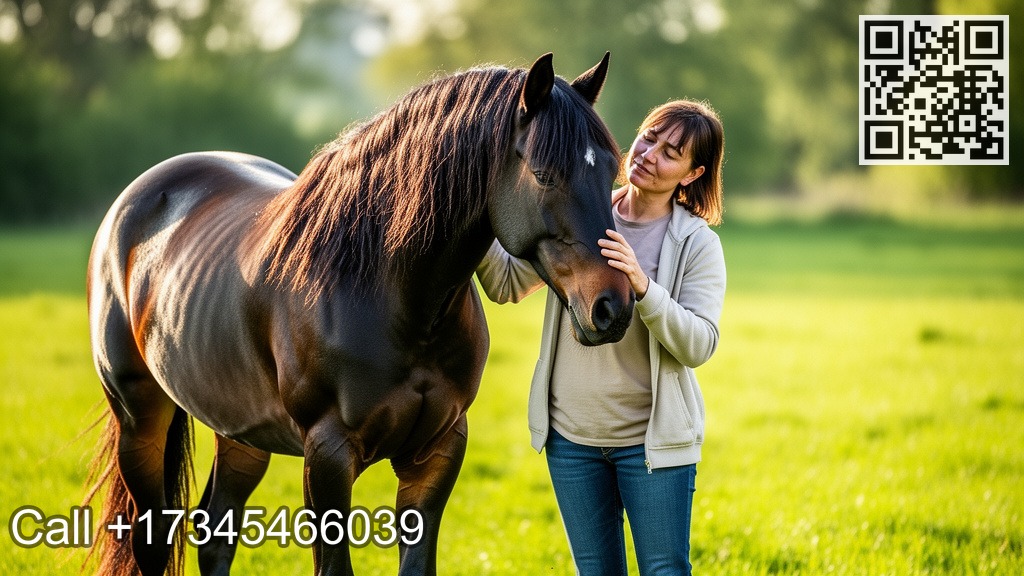
When it is not the right path
Horses are not for everyone. A deep fear of huge pets that does not soften with time can make the work much more about survival than knowing. Allergies occasionally rule the barn out. Some people like water or songs as their primary restorative practice. That is fine. The principle beneath equine-facilitated coaching is relational, somatic understanding with receptive comments. You can locate that with pets in canicross, with rock in a climbing gym, or with trees on a route. If you try steeds and it does not click, recognize that and select another path towards belonging.
Bringing the discovering home
The best results come when you equate sector understandings into everyday routines. If you discovered that growing your feet and breathing out welcomed Finn to step towards you, examination that position prior to a hard discussion with your teenager. If your group uncovered that silence aided the steed choose, develop a five-second time out before addressing questions in meetings. Small techniques, repeated, re-wire patterns.
I had a client that taped a picture of her horse companion close to her computer monitor with one phrase beneath it: match your within to your outside. On days when her calendar swelled and her jaw started to ache, she gazed left, stood up, really felt the floor, and let her breath drop an inch. That thirty-second reset altered the high quality of her next conversation. With time, it transformed her high quality of life.
Finding your herd
Belonging is not only regarding other individuals. It is also regarding belonging to your own body and internal knowing. Equines have a tendency to meet us there, in the gap in between just how we think we are and how we in fact are. When a pet that can leave chooses to remain, when it transforms its ear toward your voice and strolls with you, a thread draws tight in between nervous systems. That thread can advise you how to be with on your own, after that with others.
Whether you are a parent seeking a steadier rhythm at home, a leader desiring cleaner boundaries, or a teen that requires a room where words are optional, equine-assisted coaching uses a based means ahead. It lives within the wider landscape of equine-assisted services, together with restorative horsemanship, equine-assisted tasks, and scientific treatments. The best match https://rowanzphf756.wordcanopy.com/posts/activity-that-heals-mounted-sessions-for-somatic-regulation depends upon your objectives. Ask inquiries, check out barns, depend on your sense of fit, and select the program that values both human and horse.
I still consider that very first customer with Finn. She arrived specific that link had actually unclothed reach. She left with hay on her sleeve and a quiet smile. The sector did not repair her life. It did something less complex and more profound. It reminded her that belonging is a method, learned step by step, breath by breath, with a teacher who speaks in unguis and silence and presence.
Happy Hooves Wellness
9177 Gross Rd, Dexter, MI 48130
+17345466039
https://www.hhooves.com/